Legal accounting software for Scottish law firms
Purpose-built for Scottish law firms and built for compliance with the Law Society of Scotland Accounts Rules. LEAP gives you a complete set of accounting tools for client and nominal accounts, warns you of compliance risk before it becomes a breach, and keeps a tamper-proof audit trail of every transaction - inspection-ready, every day.

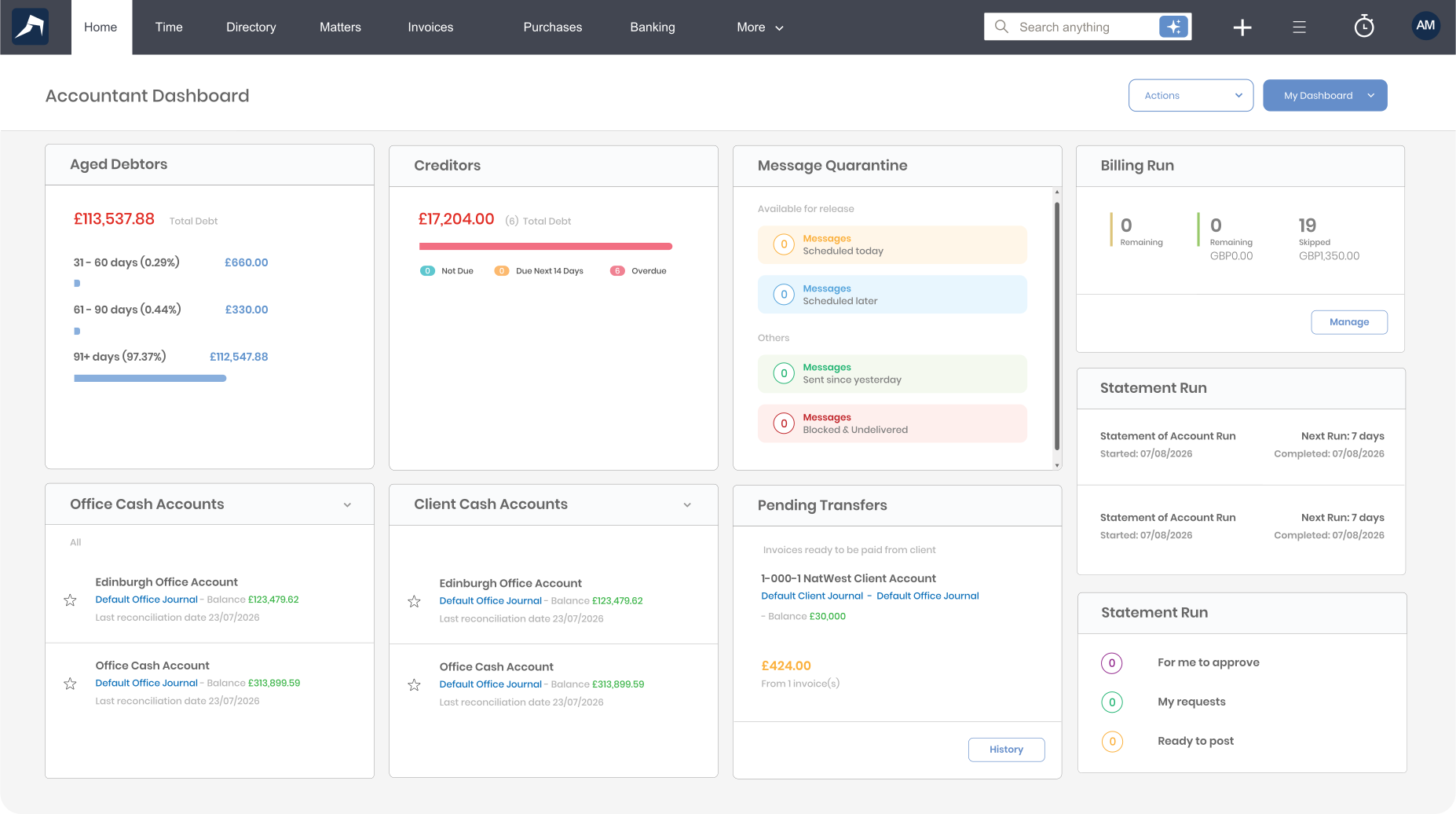
Every transaction in one platform
Client ledgers, auto-time WIP, invested funds, fees and outlays sit on the matter - not in a separate accounts package. Balances update as your fee earners work.
Automatic time recording captures every billable minute across all work types, and you can view your surplus on your dashboard.
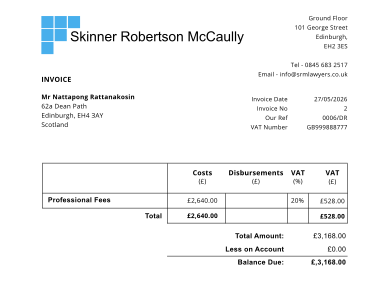
Fees out faster, cash in sooner
Set your own billing codes and fixed fee structures, then raise VAT ready fee notes with costs and outlays split out, straight from the matter.
Clients pay online through LEAP's integrated payment portal, so funds are receipted and allocated without chasing.
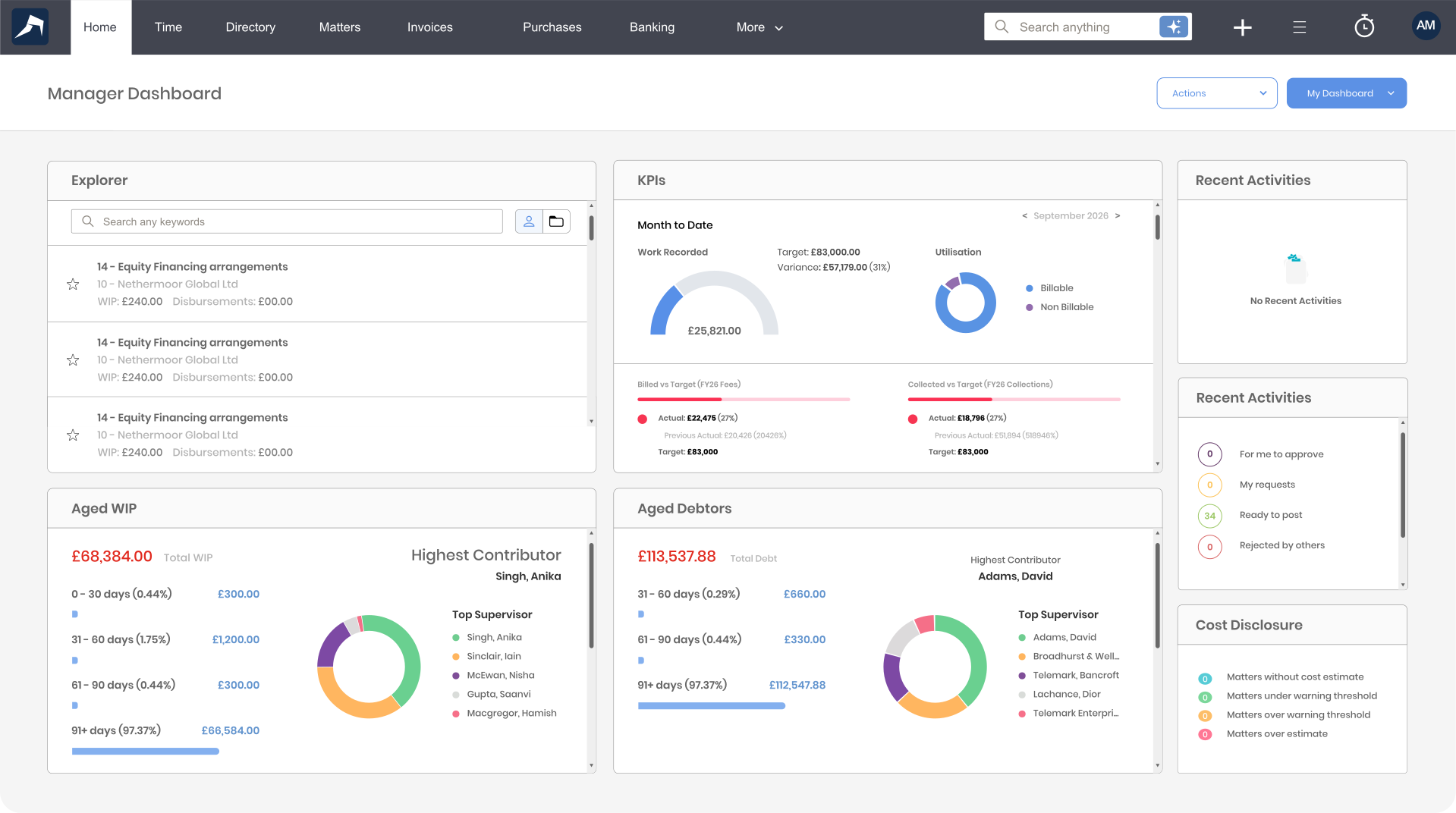
Unlock financial intelligence
Visualise your firm's financial health at a glance with powerful, real-time dashboards. Track cashflow, monitor performance and uncover actionable insights.
Smarter, faster decisions - made on live figures rather than last month's export.
Written for the Law Society of Scotland Accounts Rules
Scotland has its own rules, its own month-end and its own certificate. LEAP produces what Rule B6 asks for as part of your day-to-day accounting — not as a separate exercise at the end of the month.
COMPLIANCE
Surplus / float position
Compare the reconciled client bank balance with the total of client credit balances at every balancing date, and evidence the surplus—including when it is nil.
Monthly reconciliation & trial balance
Reconcile the client bank at intervals not exceeding one month, balance the books monthly, and show the true financial position of the practice unit.
Holding ledger for undelivered funds
Record funds received as undelivered pending settlement, showing to whose order they are held and for what purpose—essential on Scottish conveyancing settlements.
Invested client funds
Track money placed in specified deposit and interest-bearing accounts, with the three-monthly reconciliation and the list of invested balances per client.
Client interest and residual balances
Account for interest where it is reasonable to earn it, with LBTT and registration dues treated correctly, and see balances still held once a matter concludes.
Accounts Certificate and inspection
Give your cashroom manager the figures behind the certificate, and produce the chronological, contemporaneous records an inspector asks to see—retained for the required retention period.
Scottish legal accounting in one system
In-built, not bolted on
Practice management that hands your figures to a general accounts package puts your client ledgers in one system and your nominal ledger in another. When the Society inspects, the gap between them is yours to explain.
LEAP for Scotland
Scottish legal accounting built into the platform
Client ledgers and the cash book in one set of records
Surplus/float and reconciliation statements produced from live data
One unbroken audit trail — every entry carries its matter, date and user
Records retained for the required retention period with nothing to export
One vendor accountable for Scottish compliance, updated as B6 changes
Case management plus a third-party accounts package
General ledger software connected by an integration
Client ledgers and nominal ledger held separately, synced on a schedule
Surplus/float calculated by hand, usually in a spreadsheet
Controls designed for trading businesses, not for client money
Audit trail split across two systems, plus sync errors to reconcile
Evidence assembled from exports when an inspection is called
Control and insight for growing practices
Know where the firm stands
Produce client balance listings, WIP and management reports for any period from live data, and go deeper with advanced analytics in RedView to track productivity and plan ahead.
Cashroom approvals with a paper trail
Fee earners raise requests; the cashroom approves them. Larger practices with a central accounts team get oversight, fewer errors, and evidence of the supervision Rule B6 expects of a cashroom manager.
See LEAP on your own matters
Book a 30-minute demonstration and we'll show you the surplus calculation, the holding ledger and the reports your Cashroom Manager relies on.