Practice Management
Law Firm Key Performance Indicators: 8 Metrics That Reveal How Your Firm Is Really Performing
October 15, 2024 ・ 6 min read
Updated: November 4, 2026
Running a law firm without performance metrics is like navigating without a compass—you may move forward, but you won’t know if you’re headed in the right direction. In today’s competitive legal market, relying on intuition alone isn’t enough to drive profitability, efficiency, and client satisfaction.
Tracking the right law firm key performance indicators (KPIs) can give you visibility into your firm's financial health, operational workflows, and client relationships. With modern reporting tools for law firms, you can measure progress more accurately, spot problems sooner, and make decisions based on evidence rather than guesswork.
This article walks through the law firm key performance indicators worth tracking, why each one matters, and how to turn that data into action.
Table of contents
Why law firm key performance indicators matter
Key performance indicators (KPIs) can help law firms move beyond assumptions about how their business is doing and make decisions based on measurable results. Every firm can generate valuable data through daily activities, from tracking time and sending invoices to communicating with clients and managing cases.
Let’s review four types of KPIs and metrics your law firm should consider tracking:
1. Client satisfaction
Client satisfaction is the foundation of long-term success. Metrics tied to outcomes—such as case-cycle times, resolution rates, and client feedback scores—reflect the quality of the client experience. A firm that consistently delivers exceptional client experiences will inspire loyalty, repeat business, and referrals.
2. Operational efficiency
Time wasted in bottlenecks or misallocated resources translates into lost revenue. Real-time reporting and legal analytics can help identify workflow inefficiencies, so you can rebalance caseloads, automate routine tasks, and guide attorneys to focus on high-value work. If you want a deeper look at how software can help close these gaps, read how legal technology can transform your law firm's productivity.
3. Profitability and growth
Financial KPIs—like realization and collection rates, revenue per lawyer, and profit margins—help you understand what’s driving growth and where revenue is slipping through the cracks. With data-driven decisions based on law firm profitability metrics, you can more confidently set fees, invest in marketing, and adjust staffing.
4. Office and staffing resources
Track how staff spend their time and how office space is used. These metrics can reveal inefficiencies, guide smarter workload distribution, and show whether your firm’s footprint supports current needs—including remote or hybrid work. With this insight, you can better allocate resources and plan strategically for the future.
Eight essential metrics for law firm performance
What gets measured gets managed. To obtain an accurate picture of your firm’s performance, you will want to track a variety of metrics from hours billed to client satisfaction.
Here are eight key metrics you can focus on to help ensure your firm can effectively grow and thrive:
Case & workflow efficiency metrics
1. Billable vs. non-billable hours
For firms billing by the hour, how attorneys allocate their time is one of the most important metrics you can track. The ratio of billable to non-billable hours highlights productivity and can reveal hidden opportunities to recover lost revenue. Automated time-tracking tools can reduce unintentional time lost, improve utilization rates, and help create accurate billing records.
Ask yourself: Are we tracking hours with enough detail to see where time is slipping away?
2. Case-cycle time
Longer case timelines can tie up resources, increase costs, and delay payment. Measuring cycle times helps you forecast cash flow, identify workflow bottlenecks, and improve client satisfaction.
Ask yourself: Do we know how our average case-cycle time compares with firms in our region or practice area?
Revenue, profitability, and other financial metrics
3. Revenue per lawyer
This metric shows how much income each lawyer generates, offering insights into productivity and workload balance. Benchmarking revenue per lawyer against similar firms can reveal whether your rates and staffing levels are competitive.
Ask yourself: Are our billing rates and staffing structures sustainable in our market?
4. Profit margin
Healthy profit margins indicate a well-managed firm. Monitoring overhead, case profitability, and staffing costs allows you to make smarter resourcing decisions. Dashboards that compare actual expenses against budget can help you spot overspending before it becomes a bigger problem.
Ask yourself: Are we regularly comparing budgets to actuals, and adjusting quickly when needed?
5. Realization and collection rates
The realization rate measures how much of the value of billable work is actually billed, while the collection rate measures how much of that billed amount is collected. Together, they reveal the effectiveness of pricing, billing, and collections policies and their direct impact on cash flow. To gain deeper clarity into realization and collection rates, look for legal online payment and billing software with robust reporting features.
Ask yourself: Are billing policies and payment terms supporting, or hurting, our cash flow?
6. Average matter profitability
Not all cases are created equal. Some bring in higher margins, while others drain resources. Analyzing profitability by matter type enables you to refine case selection, pricing strategies, and marketing focus.
Ask yourself: Do we know which practice areas or case types consistently deliver the best ROI?
Client experience and business development metrics
7. Client satisfaction score
Surveys, feedback tools, and client collaboration platforms can help capture how your clients feel about your firm’s services at key touchpoints. Monitoring your client satisfaction score can help you improve service delivery, strengthen retention, and increase referrals.
Ask yourself: Are we gathering client feedback consistently or only when problems arise?
8. Referral rates
Referrals are a measure of both reputation and client trust. Tracking the percentage of new matters coming from referrals by existing clients or other professionals gives insight into growth potential without high marketing spend.
Ask yourself: Are we nurturing relationships that lead to consistent referrals?
How to put your firm’s data to work
Once you’ve defined which KPIs to track, the next step is turning that information into meaningful improvements across your firm. It’s not just about collecting data—it’s about building habits around analyzing, understanding, and using that intelligence to guide decisions.
Here’s how you can take practical steps to embed data-driven thinking into your daily legal practice:
Establish a reporting cadence that drives accountability
Start by selecting a handful of metrics that align with your strategic goals—whether that’s increasing profitability, improving client service, or reducing overhead. Assign ownership of each KPI and set a regular reporting schedule (weekly, monthly, or quarterly) to ensure consistent tracking. Use these checkpoints to review trends, identify problem areas, and make informed adjustments to your workflow or resource allocation.
Translate dashboards into operational insights
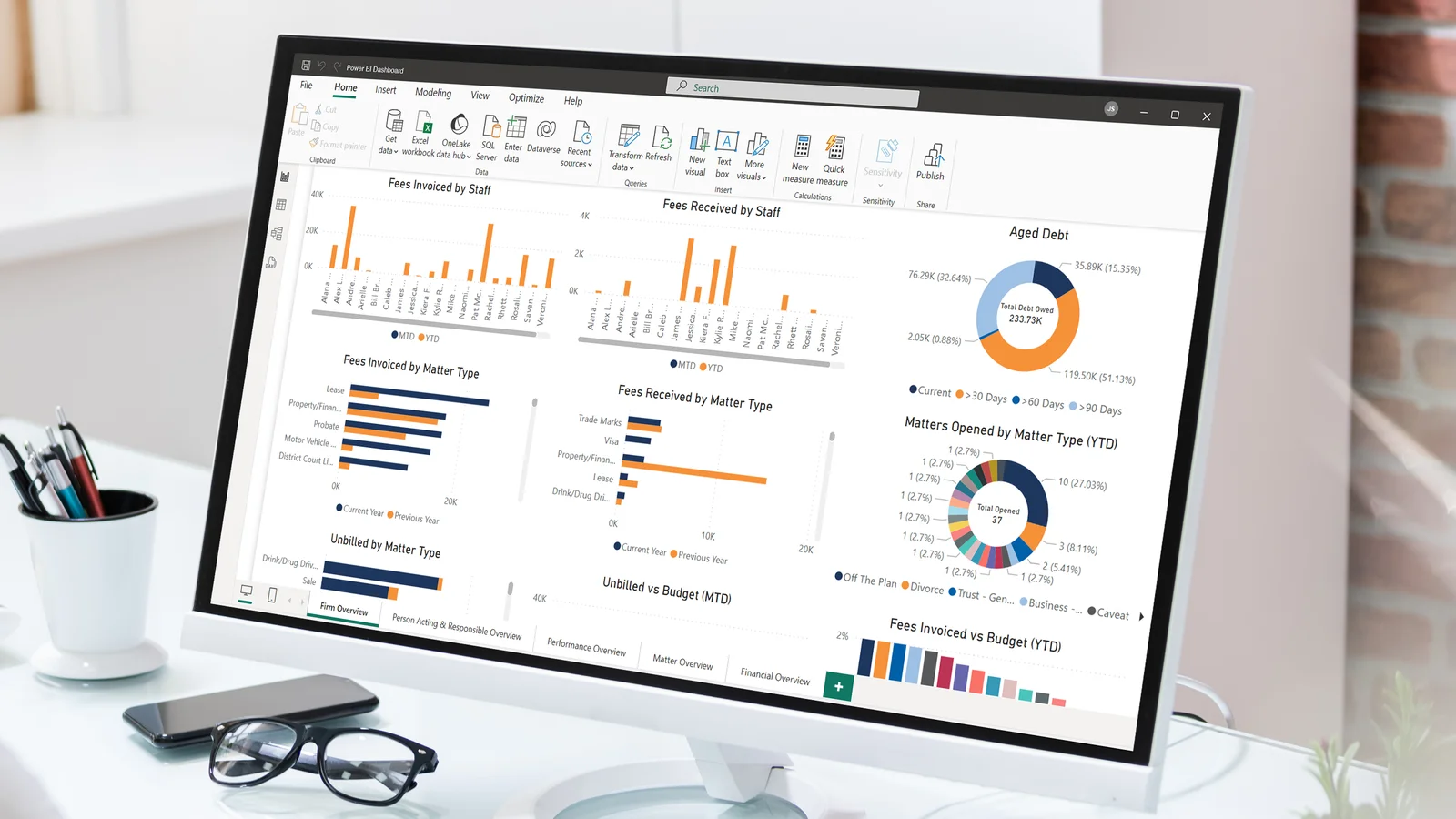
Dashboards are most powerful when they’re used as a tool for decision-making, not just observation. Use KPI dashboards, including those created with tools like Microsoft Power BI, in your regular team meetings so attorneys and staff can see how their work ties into firm-wide goals. Use visual trends in billing, collections, or matter timelines to start conversations about efficiency, staffing, or client communication strategies.
Build a data-driven culture into your firm
By embracing a culture of performance reporting, law firms can move from reactive problem-solving to proactive growth management. A clear focus on the right metrics—those that impact clients, efficiency, and profitability—can help leaders gain a clear picture of firm health and future potential.
Start simple, measure consistently, and build your reporting discipline over time. The result isn’t just improved numbers. It’s a smarter, stronger, and more sustainable law practice.
Frequently asked questions
What are the most important law firm key performance indicators to start with?
If you are new to performance reporting, start with billable vs. non-billable hours, realization and collection rates, and client satisfaction score. These three can give you a fast, reliable read on productivity, cash flow, and service quality without overwhelming your team.
How often should a law firm review its KPIs?
Most firms would benefit from a monthly review of financial metrics, like profit margin and collection rates, paired with a quarterly review of broader trends, such as referral rates and average matter profitability. Assign an owner to each metric, so reviews actually happen.
What software helps track law firm key performance indicators?
Practice management software with built-in reporting and dashboards makes tracking far easier than spreadsheets. Look for a platform that connects timekeeping, billing, and matter data automatically, so your KPIs update in real time rather than relying on manual entry.
Can small or solo firms benefit from tracking KPIs?
Yes. Solo practitioners and small firms can particularly benefit, since every hour and dollar matters a great deal to them. Tracking even two or three core law firm key performance indicators can help highlight quick wins in billing, collections, or time management.
Do law firm key performance indicators differ by practice area?
The core metrics, such as realization rate and matter-cycle time, apply across practice areas, but benchmarks can vary. A high-volume practice area may have different cycle-time expectations than a complex litigation practice, so compare your numbers against firms with a similar caseload.
Turn your firm's data into better decisions
Ready to adopt a more metrics-driven mindset at your firm? LEAP’s award-winning legal practice management software features analytics tools for law firms, including reporting and KPI dashboards for productivity, profitability, timekeeping, and more.
Gain the data-backed intelligence you need to make informed decisions, measure success, and drive growth. Schedule a demo now to see how LEAP can help you turn data into growth.
Related Articles

Explore how modern legal software can help paralegals streamline workflows, reduce manual work, and support stronger operations.

Learn how document automation can help your law firm save time, reduce errors, and improve efficiency, especially when integrated with your legal practice management software.

Explore the benefits of using CRM and legal practice management software at your law firm and how they can support lead generation, workflow efficiency, and sustainable growth.

See how modern legal technology can help your law firm increase productivity, improve workflows, and support sustainable growth in 2026.
See how LEAP can help your firm make data-driven decisions.